

Table of Contents
Introduction
In a world where the average person checks their phone over 160 times a day, getting their attention is the hardest part of marketing . While emails often languish in promotional tabs and social media posts get lost in algorithmic limbo, one channel cuts through the noise with relentless efficiency: SMS.
With open rates as high as 98% and messages typically read within 90 seconds, SMS marketing is no longer a “nice-to-have”—it’s a critical component of any modern marketing strategy . This guide will walk you through everything you need to know, from the basics of how it works to advanced strategies, top tools, and future trends.
What Is SMS Marketing and How Does It Work?
SMS marketing (Short Message Service marketing) is the practice of sending promotional content, updates, and special offers to customers through text messages . It is a permission-based communication channel that allows businesses to deliver concise, time-sensitive messages directly to a customer’s mobile device .
Here is how it typically works:
- Opt-In: A customer provides explicit consent (usually via a web form, keyword text, or checkout checkbox) to receive texts.
- Segmentation: The business uses an SMS platform to sort subscribers into lists based on interests or behavior.
- Campaign Creation: The business crafts a short, value-driven message with a clear call to action (CTA).
- Delivery: The platform sends the message via mobile carriers, and it arrives within seconds.
- Engagement: The recipient reads it (often within minutes) and takes action, whether clicking a link or replying .
Benefits of SMS Marketing
Why should businesses prioritize text messaging? The data speaks for itself.
| Benefit | Statistic / Impact | Source |
|---|---|---|
| Unmatched Open Rates | SMS open rates stand at 98%, compared to email’s ~20%. | |
| Lightning Fast Response | Average response time is 90 seconds (email is 90 minutes). | |
| High Click-Through Rates (CTR) | Click-through rates are more than 5 times higher than email. | |
| Immediate Visibility | 82% of consumers check notifications within 5 minutes of receipt. | |
| Global Reach | Businesses can reach customers in 180+ countries with the right platform. |
SMS Marketing Tools
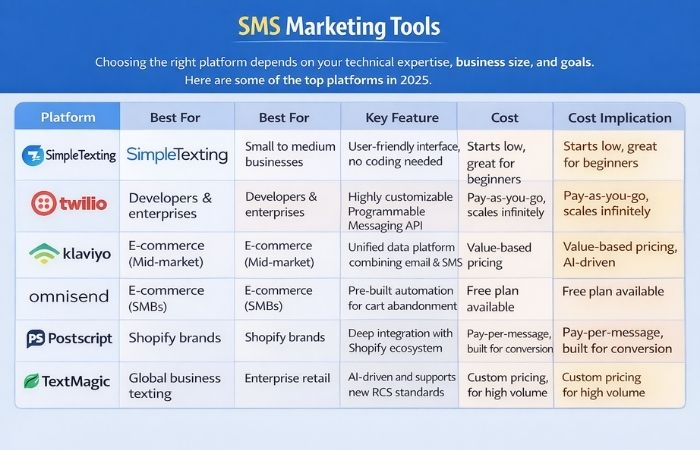
Choosing the right platform depends on your technical expertise, business size, and goals. Here are some of the top platforms in 2025 .
| Platform | Best For | Key Feature | Cost Implication |
|---|---|---|---|
| SimpleTexting | Small to medium businesses | User-friendly interface, no coding needed | Starts low, great for beginners |
| Twilio | Developers & enterprises | Highly customizable Programmable Messaging API | Pay-as-you-go, scales infinitely |
| Klaviyo | E-commerce (Mid-market) | Unified data platform combining email & SMS | Value-based pricing, AI-driven |
| Omnisend | E-commerce (SMBs) | Pre-built automation for cart abandonment | Free plan available |
| Postscript | Shopify brands | Deep integration with Shopify ecosystem | Pay-per-message, built for conversion |
| Attentive | Enterprise retail | AI-driven and supports new RCS standards | Custom pricing for high volume |
| TextMagic | Global business texting | Supports 180+ countries, no app required | Transparent, per-message pricing |
How to Start SMS Marketing
Getting started with SMS doesn’t require a massive budget, but it does require intention. According to experts, there are three key components to every high-performing SMS campaign :
- Your Promotion: How you ask people to join your SMS list. Generic pop-ups aren’t enough—make your opt-in campaign feel unique and creative.
- Your Incentive: What you’re offering in exchange for a phone number. Think beyond “10% off.” Treat SMS subscribers like an “elite club” with exclusive perks .
- Your Message: How you keep subscribers engaged post-opt-in. Deliver content that feels personal, useful, and engaging—not just transactional.
Step-by-Step Guide to Building an SMS Marketing Strategy
Experts recommend the “Crawl, Walk, Run” model to adopt SMS in phases without overwhelming your team .
| Phase | Focus | Activities |
|---|---|---|
| Crawl | Build Trust | Start with transactional messages (order confirmations, shipping alerts, password resets). |
| Walk | Drive Engagement | Layer in promotional campaigns. Target specific segments based on real-time behaviors (e.g., flash sales, abandoned carts). |
| Run | Orchestrate | Integrate SMS with email, push, and in-app messages. Use AI to personalize and optimize send times automatically. |
How to Use SMS Marketing to Boost Customer Engagement
Engagement isn’t just about sending more messages; it’s about sending better ones. Here are some specific use cases :
| Use Case | Example | Why It Works |
|---|---|---|
| Appointment Reminders | “Reminder: Dr. Smith at 2 PM tomorrow. Reply CONFIRM.” | Reduces no-shows and provides utility. |
| Flash Sales | “Flash Sale! 30% off for the next 3 hours only. Show this text in-store.” | Creates urgency that email can’t match. |
| Order Updates | “Your package is out for delivery. Track here: [link]” | Builds trust through transparency. |
| Feedback Requests | “How was your service today? Rate 1-5.” | Low-friction way to collect reviews. |
| Exclusive Content | “Farm update: We just harvested the first batch of strawberries!” | Builds community (farm-to-phone) . |
Why Is SMS Marketing Important for Businesses?
SMS has shifted from a secondary channel to a primary revenue driver. With email open rates declining due to spam filters and promotional tabs, SMS offers a direct line to the consumer that is hard to ignore .
Furthermore, it’s becoming a preferred customer service channel. Currently, 31% of consumers now prefer texting businesses over email or phone . Businesses that fail to offer this channel risk losing customers to competitors who do.
Where to Find the Best SMS Marketing Tools?
The best tools can be found by evaluating your specific needs against the market leaders .
- For E-commerce: Look at Postscript (Shopify-native), Klaviyo, or Omnisend.
- For Developers: Twilio is the industry standard for API flexibility.
- For Small Business: SimpleTexting, EZ Texting, or SlickText offer the easiest learning curves.
- For Enterprise/Compliance: Attentive or Vibes offer high-touch support and advanced features .
How Can SMS Marketing Benefit Your Business?
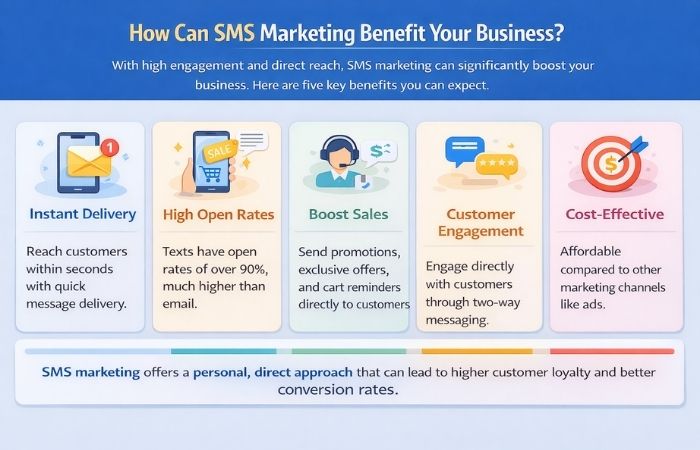
The benefits extend beyond just sending coupons. SMS helps streamline revenue operations . When integrated with CRMs like Salesforce or HubSpot, SMS allows sales and support teams to engage in threaded, multi-user conversations, reducing errors and delays. This turns SMS from a marketing tool into a comprehensive contact center solution .
Top 10 SMS Marketing Strategies to Increase Sales
Here are actionable strategies to turn texts into revenue.
| Strategy | Description |
|---|---|
| 1. Abandoned Cart Recovery | Automatically text shoppers who left items in their cart with a gentle reminder or discount. |
| 2. VIP Loyalty Club | Create an exclusive SMS list for your best customers with early access to sales. |
| 3. Birthday & Anniversary Offers | Automate personalized messages with a unique discount code for the customer’s special day. |
| 4. Product Launch Alerts | Build hype by alerting subscribers before a drop goes live to the public. |
| 5. Back-in-Stock Alerts | Notify customers immediately when a coveted item is available again. |
| 6. Interactive Quizzes | Use SMS to run a quiz and recommend products based on answers . |
| 7. Polls and Voting | Engage your audience by letting them vote on new product colors or flavors. |
| 8. Location-Based Offers | If a customer is near a physical store, send a location-specific offer. |
| 9. Reorder Reminders | For consumable goods, text customers when it’s likely time to reorder. |
| 10. Cross-Sell After Purchase | A few days after a purchase, recommend a complementary product via text. |
Best Practices for SMS Marketing Success
To ensure your campaigns drive revenue rather than opt-outs, follow these golden rules .
| Practice | Why It Matters |
|---|---|
| Obtain Explicit Consent | It’s the law (TCPA, GDPR, CASL). Never buy lists or use pre-checked boxes . |
| Make Opt-Out Easy | Include “Reply STOP to unsubscribe” in every message. It’s required and builds trust . |
| Respect Time Zones | Don’t text at 11 PM. Schedule messages for business hours in the recipient’s time zone. |
| Keep it Short | Stick to one idea and one CTA. SMS has a 160-character limit for a reason. |
| Limit Frequency | 1-4 messages per month is often enough. Over-texting is the fastest way to get blocked. |
| Identify Yourself | Start with your business name so the recipient knows who it is. |
| Track the Right Metrics | Monitor delivery rate, CTR, conversion rate, and opt-out rate . |
The Future of SMS Marketing: Trends to Watch
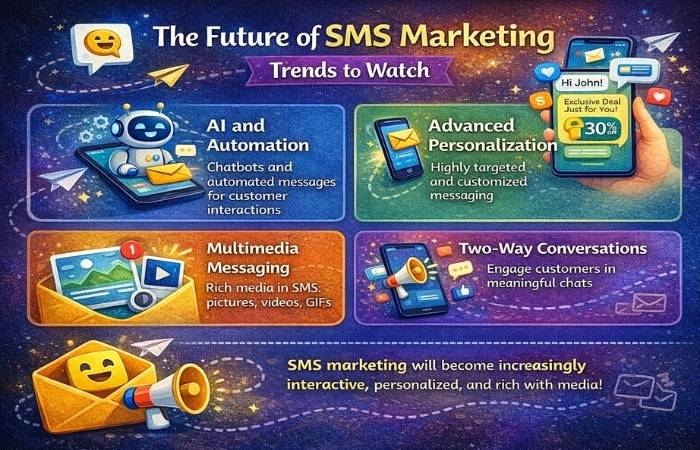
SMS is evolving. Here’s what’s on the horizon for 2025 and beyond :
- RCS (Rich Communication Services): With Apple supporting RCS, brands can now send rich media (images, video, carousels, buttons) to almost all smartphones. This turns texts into mini-app experiences.
- AI-Powered Personalization: AI is being used to determine the optimal send time for each user and even generate hyper-personalized copy that resonates with individual purchase history.
- Conversational Commerce: Brands are moving away from one-way blasts and toward two-way dialogues, using chatbots and live agents to sell directly within the text thread.
- Tighter Compliance Automation: As regulations tighten, platforms are automating more of the compliance process, from consent logging to automatic suppression lists, to protect brands from fines .
Conclusion
SMS marketing is the most direct, urgent, and personal channel available to brands today. While it requires a commitment to value and a strict adherence to privacy regulations, the payoff is undeniable: higher engagement, stronger loyalty, and a significant boost to the bottom line.
Whether you are a local bakery sending “farm-to-phone” updates or a global retailer generating 39% higher revenue per message, SMS offers a unique opportunity to meet your customers exactly where they are: on their phones.
Start small, focus on value, and scale with intention. Your customers’ attention is waiting.
Frequently Asked Questions (FAQs)
1. Is SMS marketing expensive?
It can be more expensive than email due to carrier fees, but it offers a higher ROI. Many platforms offer pay-as-you-go pricing, and costs can be as low as $0.0072 per message in the US.
2. How is SMS different from MMS?
SMS is text-only (160 characters). MMS (Multimedia Messaging Service) supports images, GIFs, and videos. MMS is great for visual products but typically costs 2-3 times more than SMS.
3. Do I need consent to send marketing texts?
Yes, absolutely. In the US, you need “prior express written consent” under the TCPA. In Canada (CASL) and Europe (GDPR), you need explicit opt-in consent. Pre-checked boxes are illegal.
4. Can I send SMS internationally?
Yes, but regulations and costs vary by country. Platforms like Twilio and TextMagic specialize in global reach, but you must ensure you comply with local privacy laws.
5. How often should I text my subscribers?
Most brands find success with 2 to 4 messages per month. Start conservatively. If you have valuable content or a flash sale, you can increase frequency, but always monitor your opt-out rates.
6. What is a short code vs. a long code?
- Short Code (5-6 digits): Best for high-volume, one-way marketing blasts.
- 10DLC (10-digit long code): Looks like a local number, better for two-way conversations, and requires registration for compliance .